Introduction: Why Sales Teams Struggle with Manual Onboarding
In many Indian businesses, the sales cycle doesn’t end when a deal is closed—it actually gets more complicated. Once a customer says “yes,” the onboarding process begins. And for most SMEs and enterprises, this stage is still heavily manual.
Sales teams collect documents over email or WhatsApp, operations teams verify them in spreadsheets, approvals move through multiple people, and customer data gets entered into different systems—often more than once. This leads to delays, errors, and frustrated customers.
Imagine closing a deal and then taking 3–5 days just to onboard the customer because documents are missing, approvals are pending, or someone forgot to update the CRM. In competitive markets like India, where customers expect quick service, this delay can directly impact revenue and brand trust.
This is where Customer Onboarding Process Automation becomes critical. It helps businesses move from slow, manual workflows to fast, structured, and scalable processes.
Challenges in Manual Customer Onboarding
Here are some common problems Indian businesses face during onboarding:
1. Document Collection Delays
Customers send KYC documents, agreements, and forms through multiple channels. Files get lost, versions get mixed up, and follow-ups become endless.
2. Multiple Approval Bottlenecks
Approvals from finance, compliance, and operations often happen over email or calls. There’s no visibility on who approved what and when.
3. Data Entry Errors
Customer data is manually entered into CRM, billing systems, and internal tools. This increases the chances of duplication and mistakes.
4. Lack of Process Visibility
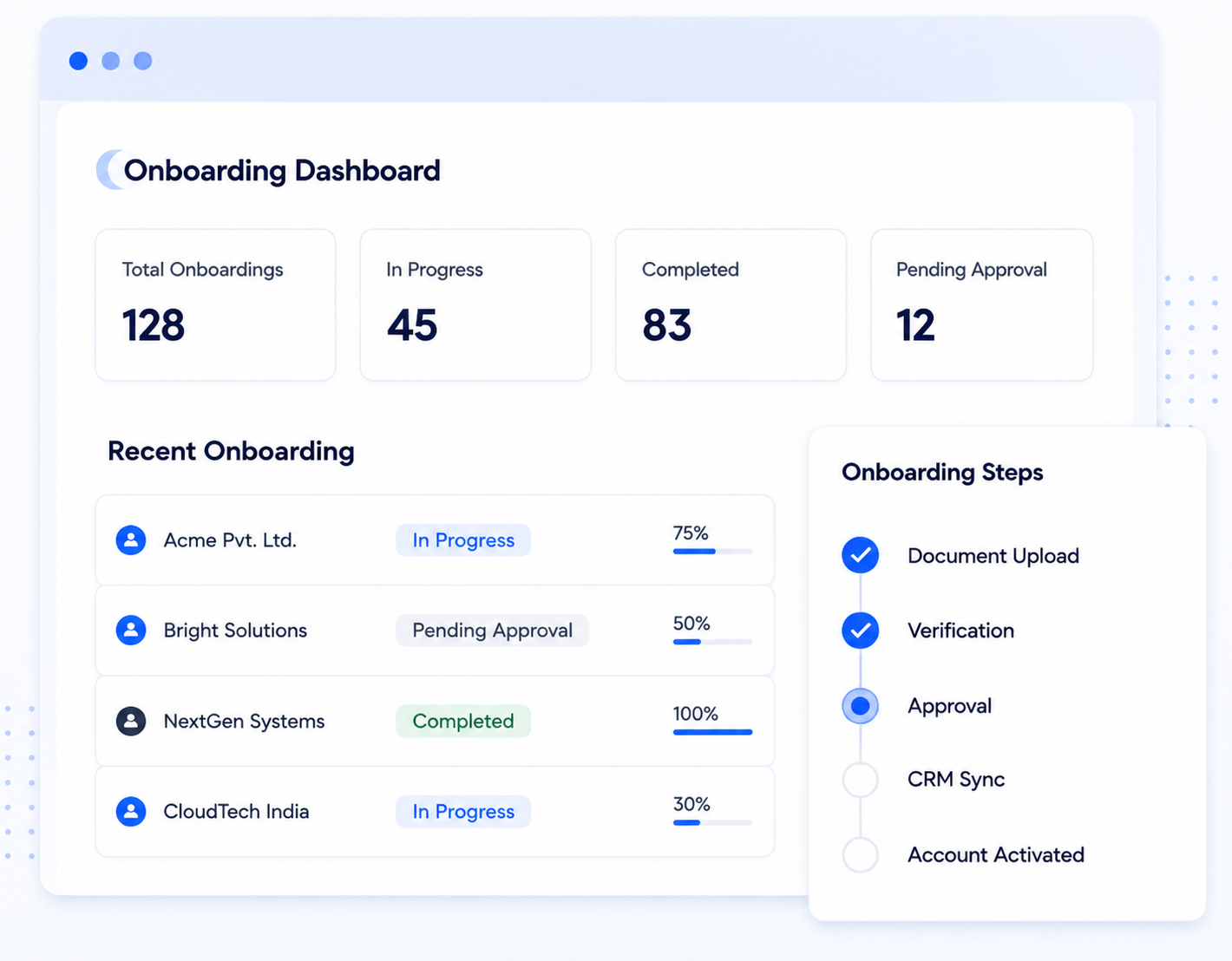
Managers have no real-time view of onboarding status. They rely on updates from team members instead of a centralized dashboard.
5. Compliance Risks
Industries like fintech, insurance, and SaaS require proper documentation and verification. Missing a single step can lead to compliance issues.
6. Poor Customer Experience
Customers get repeated calls asking for the same information. This creates a bad first impression right after the sale.
What is Customer Onboarding Process Automation?
Customer Onboarding Process Automation is the use of technology to streamline and manage the entire onboarding journey—from document collection to approvals and system updates—without manual intervention.
Instead of relying on emails, spreadsheets, and follow-ups, automation tools create a structured workflow where every step is predefined and executed automatically.
In simple terms:
Right data → Right process → Right person → At the right time
How It Works: Step-by-Step Example (Sales Onboarding Workflow)
Let’s take a practical example of a SaaS company onboarding a new client in India.
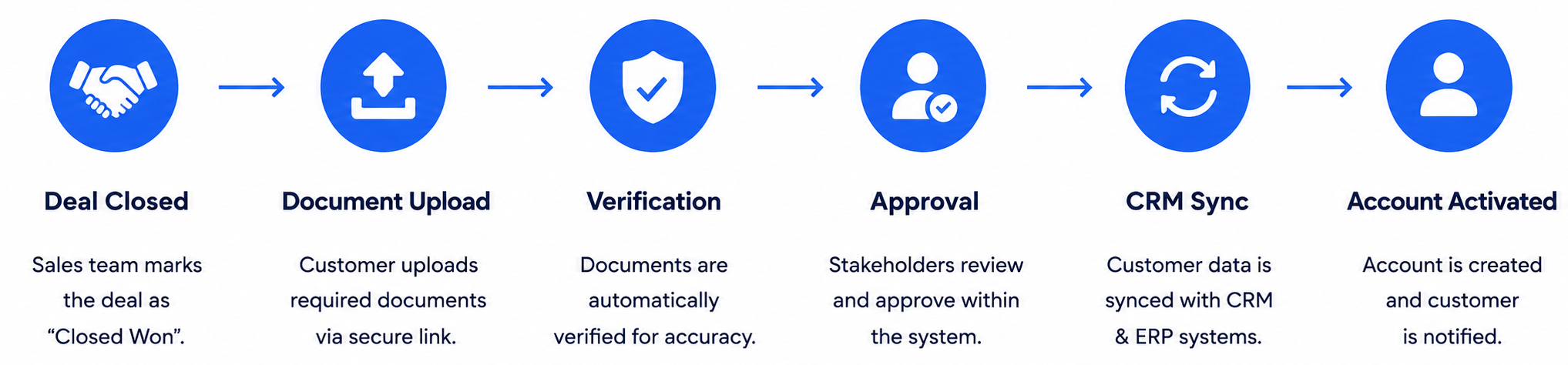
Step 1: Deal Closure
Sales team marks the deal as “Closed Won” in CRM.
Step 2: Automated Workflow Trigger
The system automatically starts the onboarding workflow.
Step 3: Document Request
Customer receives a secure link to upload required documents (PAN, GST, agreement, etc.).
Step 4: Document Verification
Uploaded documents are automatically checked for completeness and accuracy.
Step 5: Internal Approvals
Finance and compliance teams receive tasks to approve or reject within the system.
Step 6: Data Entry Automation
Customer data is extracted and pushed into CRM, billing, and ERP systems automatically.
Step 7: Account Setup
Once approvals are completed, the system triggers account creation and sends login credentials.
Step 8: Customer Notification
Customer gets confirmation and onboarding completion message.
Result: What used to take 3–5 days now happens in a few hours.
A Practical Approach to Automation (Without Overcomplicating It)
Many businesses hesitate to adopt automation because they think it requires heavy IT involvement or complex systems. But modern solutions are designed to simplify operations, not complicate them.
This is where tools like Snoh Flow and Snoh Fusion come into play.
Snoh Flow – Workflow Automation
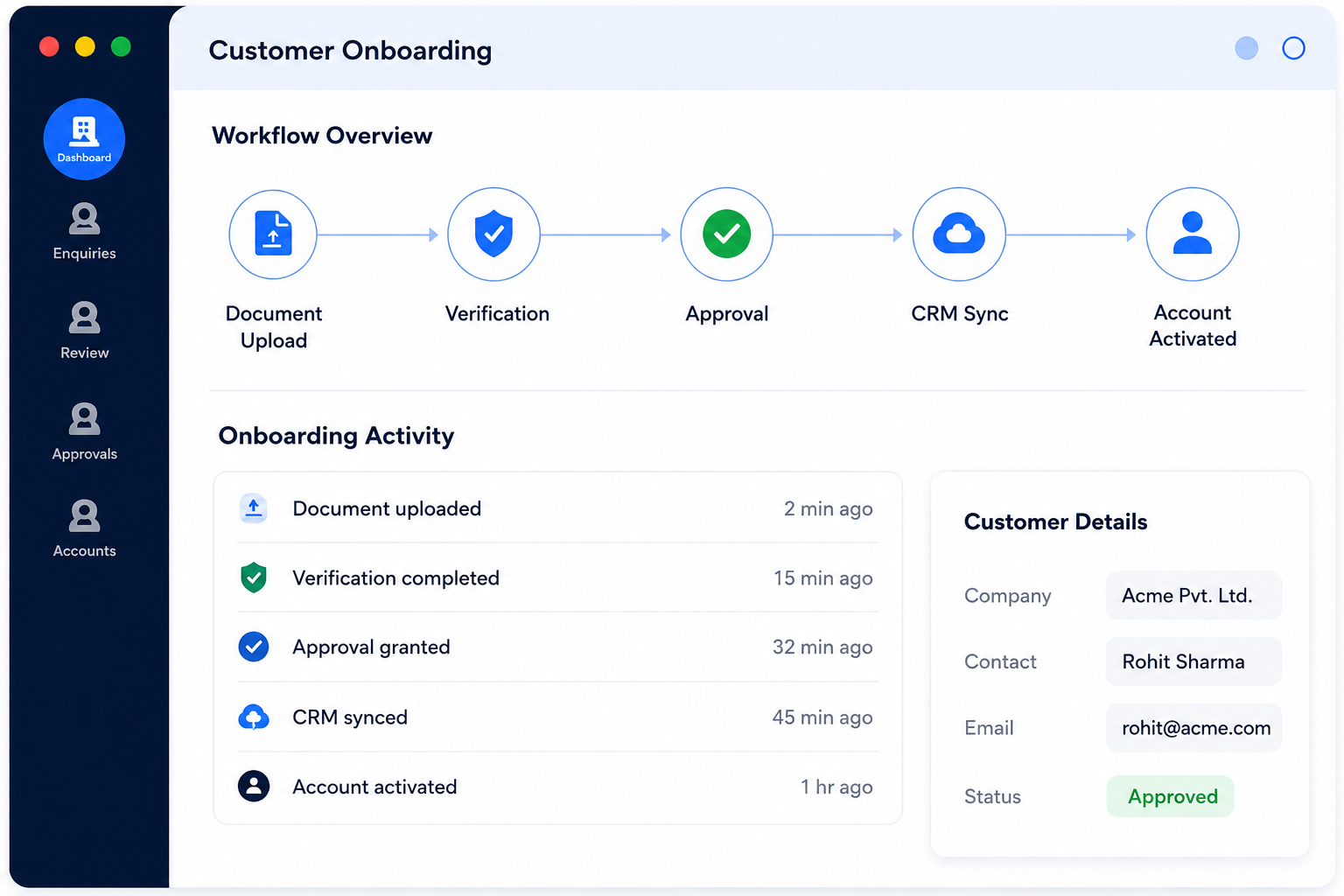
Snoh Flow helps businesses design and automate onboarding workflows without writing code. You can define steps, assign roles, and track progress in real-time.
Snoh Fusion – Document & Data Automation
Snoh Fusion handles document processing—extracting data from uploaded files, validating it, and pushing it into your systems automatically.
Together, they create a seamless onboarding experience where processes run in the background while teams focus on decision-making instead of manual work.
Benefits of Customer Onboarding Process Automation
1. Faster Onboarding
Reduce onboarding time by 60–80% by eliminating manual steps and delays.
2. Fewer Errors
Automated data extraction and validation reduce human errors by up to 90%.
3. Better Team Productivity
Operations and sales teams spend less time on follow-ups and more time on high-value tasks.
4. Real-Time Visibility
Track every onboarding case with dashboards and status updates.
5. Improved Compliance
Ensure every step is completed and documented properly.
6. Enhanced Customer Experience
Customers experience a smooth, professional onboarding process without repeated requests.
Use Case: Before vs After Automation
Scenario: Mid-Sized Fintech Company in India
Before Automation:
- Sales team collects documents via email and WhatsApp
- Operations team manually verifies documents
- Finance approvals take 2–3 days
- Data is entered into multiple systems manually
- Total onboarding time: 4–5 days
- Frequent errors and customer complaints
After Implementing Customer Onboarding Process Automation:
- Automated document collection via secure links
- Instant document validation and data extraction
- Approval workflows triggered automatically
- Data synced across systems without manual entry
- Total onboarding time: Same day or within 24 hours
- Significant reduction in errors and follow-ups
Impact:
- 70% faster onboarding
- 50% reduction in operational workload
- Improved customer satisfaction
Why This Matters for Indian Businesses
In India, businesses often deal with high volumes, diverse customer profiles, and strict compliance requirements (GST, KYC, etc.). Manual onboarding simply doesn’t scale.
Whether you are:
- A SaaS company onboarding clients daily
- A fintech firm handling KYC verification
- An enterprise managing vendor or partner onboarding
Automation ensures consistency, speed, and accuracy—without increasing headcount.
Conclusion: From Chaos to Control
Customer onboarding doesn’t have to be slow, messy, or dependent on manual effort. With the right approach to Customer Onboarding Process Automation, businesses can transform this critical stage into a smooth, efficient, and scalable process.
Instead of chasing documents and approvals, your team can focus on delivering value to customers from day one.
Ready to Simplify Your Onboarding Process?
If your team is still relying on emails, spreadsheets, and manual approvals, it’s time to rethink the process.
Explore how automation can fit into your current workflow and start small—one process at a time.
Book a demo or try a free trial to see how Customer Onboarding Process Automation can reduce delays, improve accuracy, and help your business scale faster.